How to Choose the Right Generator Size in Kuwait
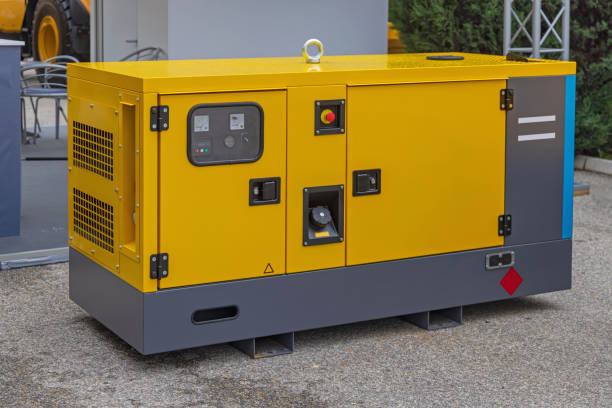
Picking the right generator size doesn't have to be complicated. This short, practical guide walks you through the basic steps in plain language — so business owners, contractors and homeowners in Kuwait can choose a reliable generator without getting lost in technical formulas. Use the DME Generator Calculator for a quick result after you follow these simple checks.
Step 1 — List what you’ll run (keep it simple)
Make a short list of the main equipment you need the generator to power. For most people that list looks like this:
- Lights and sockets (basic lighting and small appliances)
- Refrigeration or freezer (if you run stores, kitchens)
- Air-conditioning or fans (one or more units)
- Critical equipment (computers, security systems, medical devices)
- Large motors (compressors, pumps) — note these need extra starting power
If you’re unsure about an item, note its label (watts or amps) or the model and we can help identify it.
Step 2 — Use an easy rule-of-thumb
For a quick estimate you can use this simple approach (it’s not exact but gets you in the right ballpark):
- Small home or office (lights + small appliances): **10–20 kVA**
- Small shop / restaurant (fridge + moderate AC): **25–50 kVA**
- Construction site or large office (motors, heavy tools): **75–200 kVA**
These ranges assume typical usage. After you pick a range, use the DME Generator Calculator to confirm a recommended kVA.
Step 3 — Remember starting power for motors
Motors (AC units, compressors, pumps) need a short burst of extra power to start. This can be 3× the running power in some cases. If your list has motors, choose a generator one size larger than your initial estimate or tell the DME team which motor models you have — we’ll size correctly.
Step 4 — Consider how you’ll use the generator
Decide if the generator is for emergency backup (standby) or daily/long-term use (prime):
- Standby: only during power outages (short runtime) — choose a unit rated for standby.
- Prime: if you expect to run the generator for many hours, pick a prime-rated generator or discuss continuous-duty models with DME.
Step 5 — Account for Kuwait’s climate
Hot weather reduces generator capacity — manufacturers provide derating info. In Kuwait, plan a small safety margin (typically 5–15%) so your generator can handle hot days without overload.
Simple checklist to finish:
- Make a short list of equipment (labels or model numbers if possible).
- Pick the rough kVA range from the rule-of-thumb above.
- Use the Generator Calculator for a quick number.
- If motors are included, select one size up or contact DME with model numbers.
Two short real-world examples
Example 1 — Small shop: lights, cash register, small freezer → estimate 25 kVA.
Example 2 — Small construction site: handheld tools, a 5 HP compressor → estimate 75–100 kVA (account for starting current).
Where DME helps (we do the heavy lifting)
If you want a reliable, final specification we’ll:
- Check your equipment list and starting currents
- Choose the correct kVA and rating (standby vs prime)
- Recommend Perkins or other suitable models and canopy or soundproof options
- Provide installation and maintenance packages
See our detailed posts for more reading: Generators in Kuwait and Perkins Spare Parts in Kuwait.
Common mistakes to avoid
- Underestimating motor starts — leads to nuisance trips.
- Buying by price alone — cheaper generators may not handle the duty cycle.
- Not planning for future load growth — consider 10–20% headroom.
Conclusion
Start with the simple rule-of-thumb above, run the numbers through our calculator, then contact DME for confirmation. That process gives you a fast, reliable sizing that works in Kuwait’s climate and protects your equipment.
👉 Contact DME Generators if you’d like a free sizing review — send us your equipment list and we’ll handle the rest.
Can I size a generator using only amps?+
Yes — but you need to know the voltage (230V single-phase or 400V three-phase) and whether loads are motors or resistive. The calculator converts amps to kW/kVA when you provide these details.
Should I oversize my generator?+
Slight oversize (10–20%) is a good practice to cover startup currents and future growth. Oversizing too much can reduce efficiency for light loads.